Hazardous Waste Laws in Merton: What Licensed Firms Must Do
Posted on 29/07/2026
If you handle hazardous waste in Merton, the rules are not something you can leave to guesswork. A missed label, a sloppy transfer note, or the wrong carrier can turn a routine collection into a costly mess. And honestly, that's the last thing any licensed firm needs on a busy day.
This guide explains Hazardous Waste Laws in Merton: What Licensed Firms Must Do in plain English. We'll look at how the legal duties work, what licensed firms are expected to do in practice, where mistakes usually happen, and how to keep operations clean, traceable, and defensible. If you want the short version: document everything, classify carefully, use the right carrier, and never treat hazardous waste like ordinary rubbish.

Why Hazardous Waste Laws in Merton: What Licensed Firms Must Do Matters
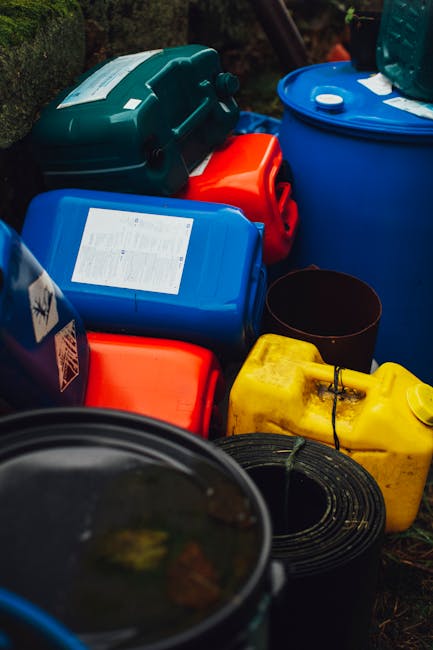
Hazardous waste is not just another skip load with a few awkward items mixed in. It can include materials that are toxic, flammable, corrosive, infectious, or otherwise dangerous to people and the environment. That means the legal and operational standard is higher. Much higher, really.
For licensed firms working in Merton, the stakes are practical as well as legal. If you get the paperwork wrong, waste can be delayed, rejected, or traced back to your business. If you store it badly, there may be safety issues for staff, customers, or neighbouring premises. If you hand it to the wrong carrier, you may still carry the blame. That is one of those uncomfortable truths in waste management.
Merton is a busy part of southwest London, with a mix of homes, offices, shops, building sites, and managed premises. In an area like that, hazardous waste can appear in everyday situations: a stripped-out office with fluorescent tubes and old batteries, a refurbishment with paint tins and solvents, a healthcare setting with sharps, or a garage clearance with oils and chemical containers. The legal duties don't change just because the waste came from a small project rather than a big industrial site.
For firms offering commercial waste removal in Merton or wider waste disposal services, hazardous waste compliance is part of trust. Clients may never ask about consignment records, segregation rules, or carrier checks. But regulators, landlords, insurers, and environmental officers can and do care. So does your reputation.
Expert summary: If your firm touches hazardous waste at any point, treat compliance as a process, not a task. Correct identification, safe handling, proper records, and lawful transfer are the backbone of everything else.
How Hazardous Waste Laws in Merton: What Licensed Firms Must Do Works
At a practical level, the legal framework for hazardous waste management in England is built around a few simple ideas: identify the waste correctly, store it safely, move it only through authorised channels, and keep accurate records. Sounds neat on paper. In real life, it takes discipline.
Licensed firms usually need to work through several stages:
- Identify the waste stream so you know whether it is hazardous, mixed, or non-hazardous.
- Separate and store it properly to reduce contamination and risk.
- Use a suitable carrier and destination that is authorised to handle that type of waste.
- Complete the required documentation before or during collection, depending on the type of movement.
- Track what happens next so the waste can be traced through to lawful treatment or disposal.
That chain matters because compliance is not only about your own site. It follows the waste. If the materials leave your hands and later end up mixed incorrectly, dumped illegally, or misdeclared, investigators can still work backwards. A paper trail is often your best protection.
In Merton, a licensed firm might be removing mixed office waste from an office clearance, old appliances from a commercial unit using appliance disposal support, or demolition leftovers from builders waste disposal. The principle stays the same: hazardous items must be identified and handled separately where required.
One thing firms sometimes overlook is that hazardous waste law is about judgement as much as paperwork. If a drum is unlabelled, if a chemical container is leaking, or if the contents are unclear, you cannot just shrug and load it anyway. That's where you pause, assess, and if needed, refuse or escalate. Better a slow collection than a bad one.
Key Benefits and Practical Advantages
Compliance often gets discussed in negative terms: avoid fines, avoid breaches, avoid trouble. Fair enough, but there are real positive benefits too.
- Safer operations: Correct segregation and storage reduce spills, exposure, and fire risk.
- Cleaner handovers: Accurate paperwork means less confusion when waste changes hands.
- Stronger client trust: Businesses feel more confident when a firm can explain its process clearly.
- Better insurance and audit readiness: Documentation helps if a claim or inspection ever happens.
- Fewer delays: Well-prepared hazardous loads are less likely to be rejected or held back.
- Lower long-term cost: Compliance upfront is usually cheaper than fixing mistakes later.
There is also a quieter advantage: good waste management tends to improve the whole operation. Staff know what belongs where. Collections run more smoothly. Sites stay tidier. And if you've ever tried to sort a cluttered back room at 6pm on a wet London evening, you'll know that tidy systems matter more than they sound.
For firms managing broader property work, hazardous waste processes can sit neatly alongside other local services like waste clearance in Merton or house clearance support. The key is making sure the hazardous element is never folded casually into general waste removal.
Who This Is For and When It Makes Sense
This topic is mainly for licensed waste firms, contractors, facilities teams, landlords, and service providers who regularly handle waste on behalf of others. But the ripple effects are broader than that.
You should care about hazardous waste laws if you are:
- a waste carrier collecting mixed commercial loads
- a demolition or refurbishment contractor
- an office or retail manager arranging clearances
- a property manager responsible for tenant waste
- a firm dealing with batteries, oils, paints, aerosols, fluorescent tubes, sharps, or solvents
- a business owner who wants to be certain your chosen carrier is actually compliant
It also matters when projects get messy. A simple office move can suddenly include toner cartridges, damaged batteries, and old cleaning chemicals. A kitchen strip-out can throw up appliance residues and contaminated packaging. A house or loft clearance can reveal forgotten containers that should never have been left there in the first place. That is why the rules are relevant well beyond obvious industrial settings.
If your work overlaps with other local service lines, for example office clearance or white goods disposal, you need a workflow that flags hazardous items early. Not after the van is loaded. Before. Always before.
Step-by-Step Guidance
Here is a straightforward way licensed firms can manage hazardous waste lawfully and sensibly in Merton.
1. Identify the waste before collection
Start by asking what the materials are, where they came from, and whether any part of the load could be hazardous. Look for labels, symbols, strong odours, leaking containers, residues, or items that normally need special handling. If the description is vague, don't force a quick answer. Pause and verify.
2. Separate hazardous items from general waste
Segregation is a big deal. Batteries should not be mixed with loose general waste. Chemicals should not be tucked in with cardboard. Sharps should not ride around uncontained. If you blend waste streams, you can turn a manageable load into a compliance headache.
3. Store the waste safely on site
Storage should minimise access, prevent spills, and reduce exposure. Keep containers closed where possible. Keep them labelled. Keep them on stable ground. If there is any risk of leakage, use suitable containment. This is not glamorous work, but it saves a lot of pain later.
4. Check the carrier and destination
Licensed firms must make sure waste is transferred to an appropriate, authorised route. That usually means the carrier, transfer station, or treatment site must be suitable for the material. Do not assume every waste destination can take every waste type. They cannot.
5. Complete records accurately
Paperwork should match the actual waste, not the waste you hoped it was. Descriptions need to be clear. Quantities should be realistic. The route should be traceable. It sounds dull until the day someone asks what happened to a load from three months ago. Then it suddenly becomes very interesting.
6. Keep copies and check retention practices
Keep records in a way that makes them easy to retrieve. Whether you manage paperwork digitally or on file, the point is the same: you want an auditable trail. A well-kept archive can be a lifesaver during complaints, client queries, or inspections.
7. Review recurring waste streams
Many firms deal with the same materials again and again. That's useful because it allows you to build repeatable procedures. If one client regularly produces battery waste or chemical containers, create a standard handling process. Repeatable beats improvised, nearly every time.
Expert Tips for Better Results
In our experience, the firms that stay out of trouble tend to do a few small things consistently well.
- Train crews to spot the awkward items early. The loading team often sees the waste before anyone else does.
- Use clear, plain language on site notes. "Mixed office waste" is not enough if the load contains hazardous items too.
- Make one person accountable for the handover. Shared responsibility can become no responsibility, which is never ideal.
- Build a refusal policy for unknown waste. If it cannot be identified safely, it should not be treated casually.
- Keep your client informed. A quick explanation upfront is better than a difficult phone call later.
- Review storage areas weekly. Small leaks and damaged containers are easy to miss when nobody checks.
A practical insight here: hazardous waste failures are often boring failures. Not dramatic ones. A missing label. A bag that was "only there for a minute." A note that got completed later and never quite matched reality. The small stuff is where a lot of risk hides.
If your firm also provides commercial waste removal across multiple premises, it helps to standardise the same checks everywhere. One checklist, one process, fewer surprises. Life is easier that way. Honestly.
Common Mistakes to Avoid
Here are the mistakes that tend to cause the most trouble.
- Assuming "small amount" means "no problem." Quantity matters, but small hazardous items still need proper treatment.
- Mixing hazardous and non-hazardous waste. This is one of the quickest ways to create compliance issues.
- Relying on vague descriptions. "Rubbish," "general waste," or "miscellaneous" are not enough when hazardous materials are involved.
- Using an unverified carrier. If you have not checked the firm's status and suitability, you are taking a risk.
- Leaving waste unlabelled on site. It only takes one confused handover to create a mess.
- Forgetting the client side of the duty. The business producing the waste still has responsibilities too.
- Not reviewing recurring problem sites. The same mistake can keep happening if nobody looks at the pattern.
Another one, which sounds minor but isn't: leaving hazardous items in a storage bay "until tomorrow." Tomorrow turns into next week, and next week turns into a forgotten corner where no one really wants to stand. You know the sort of place. Dusty, awkward, and a bit too quiet.
Tools, Resources and Recommendations
You do not need an elaborate system to comply well, but you do need a reliable one. For most licensed firms, the best tools are practical rather than fancy.
- Waste classification checklists for common materials and common job types
- Site inspection forms to record condition, labels, packaging, and risks
- Chain-of-custody records to show who handled the waste and when
- Segregated containers for batteries, chemicals, sharps, and other high-risk items
- Staff briefing sheets for recurring work, especially on fast turnarounds
- Document retention folders that are easy to search later
For firms operating locally, it can help to keep a wider set of service knowledge in view too. Pages such as services overview, rubbish collection, and recycling and sustainability can reinforce how your business approaches waste more broadly, especially when clients are comparing providers.
And while it may sound obvious, always have a way to slow things down when a load looks wrong. Speed matters in waste work, yes. But speed without control is how people end up apologising to the wrong person.
Law, Compliance, Standards, or Best Practice
Hazardous waste duties in the UK sit within a wider framework of environmental law, waste regulations, duty of care expectations, and health and safety practice. The exact legal obligations can vary depending on the waste type, the business involved, and how the waste is moved or treated, so it is important not to generalise too aggressively.
For licensed firms in Merton, the safest approach is to work to these best-practice principles:
- Know the waste stream before collection or transfer.
- Keep waste separate where mixing would increase risk or reduce recoverability.
- Use only authorised carriers and facilities suitable for the specific material.
- Maintain clear records of classification, transfer, and destination.
- Train staff regularly so the process is understood on the ground.
- Review incidents and near-misses to improve the system.
If your work touches broader compliance topics, it can also be useful to keep an eye on related operational pages such as waste carrier licence and compliance, insurance and safety, and terms and conditions. These do not replace legal advice, of course, but they help frame the wider business standards clients expect.
Best practice is not about looking perfect. It is about being able to explain what you did, why you did it, and how you kept risk under control. That is usually what matters when someone asks hard questions.
Options, Methods, or Comparison Table
Different waste handling approaches suit different situations. Here is a simple comparison to help firms think clearly about the practical trade-offs.
| Approach | Best for | Strengths | Watch-outs |
|---|---|---|---|
| In-house handling by trained staff | Repeat waste streams and predictable collections | Fast, consistent, familiar to the team | Needs good training and active supervision |
| Outsourced licensed collection | Businesses that want specialist support | Reduced admin, specialist handling, easier logistics | Must verify the carrier and the destination carefully |
| Project-based clean-up | Refurbishments, moves, closures, and one-off clearances | Flexible and efficient for unusual loads | Higher chance of mixed waste and poor sorting if rushed |
| Storage until disposal day | Short-term holding before transfer | Useful for scheduling and batching | Can create leakage, mislabelling, or space issues if left too long |
For many Merton firms, the outsourced route makes sense if hazardous waste is occasional rather than constant. On the other hand, if your business generates similar waste every week, a defined internal process may be cleaner. Neither is inherently better. The right choice depends on volume, staff capability, and how much control you need.
Case Study or Real-World Example
Picture a small property management firm in Merton handling a shop unit handover. The unit looks straightforward at first glance: old shelving, broken chairs, some packaging, a few cleaning supplies in the back cupboard. Then a team member finds a box with half-used solvent containers, a leaking aerosol can, and a bundle of old batteries near the till.
If the firm had treated the job as a simple clearance, those items might have been tipped in with the rest. Instead, the supervisor paused the job, separated the suspicious items, checked the labels, and arranged a compliant route for the hazardous portion. The rest of the load was cleared normally, and the paperwork reflected the split.
Was it slightly slower? Yes. Did it save hassle? Absolutely.
This sort of scenario happens all the time. Sometimes it's a renovation. Sometimes it's a commercial move. Sometimes it's a garage or storage room that has not been properly sorted for years. The common thread is this: the moment someone spots a hazardous item and handles it properly, the risk drops sharply. That's the kind of boring success you want.
In a similar way, a firm that already works with furniture removal or furniture disposal can build better internal checks by flagging hazardous add-ons before the load leaves site. It's a small habit, but it changes outcomes.
Practical Checklist
Use this checklist before any hazardous waste leaves a Merton site.
- Have we identified the waste type clearly?
- Has the hazardous portion been separated from general waste?
- Are the containers intact, closed, and labelled?
- Do we know whether any leakage, residue, or contamination is present?
- Has the carrier been checked for suitability?
- Is the destination appropriate for this waste stream?
- Are the transfer records complete and accurate?
- Has the client or site manager been told about any special handling?
- Have staff been briefed on what to do if more hazardous items are found?
- Are copies of records stored where they can be retrieved later?
If you want a simple rule of thumb, use this: if you would feel uneasy explaining the waste to a regulator, you probably need to slow down and tidy the process first.
Conclusion
Hazardous Waste Laws in Merton: What Licensed Firms Must Do is really about doing the basics properly, every time. Identify the waste, separate it, store it safely, move it through authorised channels, and keep proper records. Not flashy. Not complicated. But essential.
Licensed firms that handle this well tend to save time, avoid stress, and build stronger client trust. The ones that cut corners usually end up dealing with avoidable admin, delays, or worse. And let's be fair, nobody wants a routine clearance to become an investigation.
The good news is that compliance is learnable. Once your team has a clear process, hazardous waste becomes manageable rather than mysterious. A little care at the start goes a long way.
Get a free quote today and see how much you can save.